World History of Photography; John Anthony Muth
Okay so I found this book on photography and I choose it because it's not that I just want to learn on or two styles of photography but all styles of photography. I love history and it's the reason that people can understand from where they come and where they can go. History gives us avenues that otherwise would not even be identified. History tells us what has happened with the advantage of perspective. Now with most books I like to thumb through them first and read a few excerpts but can do that online at least with this book.
http://www.valorebooks.com/textbooks/world-history-of-photography-3rd-edition/9780789203298#default=buy&utm_source=Froogle&utm_medium=referral&utm_campaign=Froogle&date=04/15/14
Tuesday, April 15, 2014
Monday, April 14, 2014
Photography Book
http://laughingsquid.com/the-art-of-portrait-photography-by-pbs-arts-off-book/
The Art of Portrait Photography
“focuses on the dynamic relationship between the photographer, the subject, and the audience and how that relationship has evolved over time. ” -PBS Arts
I like how this book is all about telling stories through the portraits of people through their expressions and what they wear. I think it is essential to know how to capture someones personality, and not make the person look fake or uncomfortable. In my career that I am working towards, every time an actor auditions we have to hand over a headshot and that picture is supposed to represent that actor's personality and what type of part we fit more towards. So I think it is extremely important to capture the personality of the that person. Even for events and wedding photography you want to look perfect and happy and if you have a good photographer who understands this concept, than you will be happy with the outcome.
This video on the book is very interesting on the photographers view on the person and how the person can react to photographers. It also tells why portraits are so important to our society.
The Art of Portrait Photography
I like how this book is all about telling stories through the portraits of people through their expressions and what they wear. I think it is essential to know how to capture someones personality, and not make the person look fake or uncomfortable. In my career that I am working towards, every time an actor auditions we have to hand over a headshot and that picture is supposed to represent that actor's personality and what type of part we fit more towards. So I think it is extremely important to capture the personality of the that person. Even for events and wedding photography you want to look perfect and happy and if you have a good photographer who understands this concept, than you will be happy with the outcome.
This video on the book is very interesting on the photographers view on the person and how the person can react to photographers. It also tells why portraits are so important to our society.
Sunday, April 13, 2014
Photography Book - Darcie Naylor
Bored Couples - Martin Parr
http://www.martinparr.com/books/
Richard Avedon: Evidence 1944-1994
http://www.richardavedon.com/index.php#mi=2&pt=1&pi=10000&s=0&p=7&a=0&at=1
This assignment had me a little perplexed. I have yet to figure out how to actually Google a particular photography book and have images of the book show up. The only thing I get are links to where I can purchase the book. I realize I could head to the library and look at photography books, but my week has not allowed such an indulgence. So with this in mind, I am posting two books that I would love to look through.
The first is a book entitled "Bored Couples" by Martin Parr. This book intrigues me because face it, we've all seen what we assumed were bored couples at a restaurant, in the mall, almost everywhere we go. The fact is, these couples may or may not be bored, but through the photograph, we make an assumption. I feel like we go through our lives making assumptions - sometimes good assumptions, sometimes not so good assumptions. You can catch a few glimpses of some of the "bored couples" in Parr's book by going to the website I provided and to me, most of them are funny. A couple of the images gave me the giggles. I think I would enjoy owning this book, it would be quite the conversation piece on my living room table.
The second is a compilation of work by Richard Avedon. Avedon's work intrigues me. We watched a short film last semester that highlighted some of his work and ever since then I want to know more about him. Even though most of what I read about him indicates that he was a fashion and portrait photographer, and neither of those genre's interest me too much, there is still something about his work and the man himself that intrigues me. Even the title of this book is interesting to me. Evidence 1944 - 1994. Evidence that he worked. Evidence that he was talented. Evidence that he lived.
Wednesday, April 2, 2014
Smoke and mirrors
Using Blending modes is a great way to present the theme of Vision and Reality. These images come from one of my favorite contemporary artists in the medium. Richard Johnson of Spectacle Photography has been inspiring me since the start of my journey to become a pro photog. In a Facebook message conversation we had, he said 99.9% of his images use some form of blending mode. He used screen mode for fire in this series, it is used very well to create the images. The pictures in this series used physical make up effects and photoshop digital effects to create a creepy, eerie, portrait of burn victims/smoke monsters.
http://www.spectaclephoto.com/#/smoke/
Blending Images- Hayley Vrana
http://www.photoshopessentials.com/basics/elements/fake-layer-mask/
The thing that most intrigues me about this blended image is that it feels like they fit together so perfectly with the girl on the left looking at the little girl blowing the dandelion fuzz. When you look closer the little girls hand is blended differently that you can see because her hand is blurry and blue.

http://www.photoshopessentials.com/photo-effects/photo-blend/
I really love the look of this blended images. It looks like an engagement or wedding style photographs of a lovely couple. I also like how the two pictures were edited to the same color of sepia. This picture just reminds me of a Nicholas Sparks book cover.
I feel like the demand is high for people looking to have their photos edited more and more these days. From movie covers and book cover, to special occasions edited photos are the way to go.
http://www.photoshopessentials.com/basics/elements/fake-layer-mask/
The thing that most intrigues me about this blended image is that it feels like they fit together so perfectly with the girl on the left looking at the little girl blowing the dandelion fuzz. When you look closer the little girls hand is blended differently that you can see because her hand is blurry and blue.

http://www.photoshopessentials.com/photo-effects/photo-blend/
I really love the look of this blended images. It looks like an engagement or wedding style photographs of a lovely couple. I also like how the two pictures were edited to the same color of sepia. This picture just reminds me of a Nicholas Sparks book cover.
I feel like the demand is high for people looking to have their photos edited more and more these days. From movie covers and book cover, to special occasions edited photos are the way to go.
Monday, March 31, 2014
I have no idea what the assigned blog was this week so I decided to share something I heard today as well as an image that changed my life. Around the year 2000 I discovered the Hubble Space Telescopes web site and on that site was the"Deep Field View" (1999). This image was viewed on the couch while surfing the internet on the "Dreamcast" video game system. My buddy and I starred at this view for well over 10 minutes in just utter amazement of what we were seeing. Most of these images are galaxies, each galaxy is made of many billions of stars... We were literally looking at trillions of stars in one photo, I can begin to describe my feelings of being a part of something so much more magnificent than I had ever felt before...
Earlier today I was listening to the philosopher-theologian Alan Watts. Alan had said something completely profound and life changing as well.
“It is not true you came into this world… You came out of it. The same way as a flower comes out of a plant or a fruit comes out of a tree. As an apple tree apples, the solar system in which we live and therefore the galaxy in which we live and therefore the system of galaxies in which we live, that system,,, peoples. Therefore people are an expression of it’s energy and of it’s nature”.
We are the fruit of the universe and we should never underestimate what we are and what we've always been...
http://hubblesite.org/newscenter/archive/releases/1999/02/image/a/
Earlier today I was listening to the philosopher-theologian Alan Watts. Alan had said something completely profound and life changing as well.
“It is not true you came into this world… You came out of it. The same way as a flower comes out of a plant or a fruit comes out of a tree. As an apple tree apples, the solar system in which we live and therefore the galaxy in which we live and therefore the system of galaxies in which we live, that system,,, peoples. Therefore people are an expression of it’s energy and of it’s nature”.
Alan Watts-
https://www.youtube.com/watch?v=d3x02dQTBjE&list=UU848b72MStS_1twAV97p0yQ
The following image is the Hubble's "Ultra Deep Field View" (2004). Both images were taken from a part of the sky that had no visible stars and left there, shutter open, long exposure about the size of 1/10 of the moon, or if your hand was held out, the size of a fingernail.
http://hubblesite.org/newscenter/archive/releases/2004/07/image/b/
We are the fruit of the universe and we should never underestimate what we are and what we've always been...
With the birth of technology and digital photography, images can be made to look practically any how we want it to look. Of course there is good and bad in every thing. In some instances, those images are quite fun to see and they have good entertainment value. Unfortunately, there are times that these images have a sinister element to it and can cause a whole lot of issues to individuals or groups. There are also times that these images can bring a lot of good, for instance, they can or may convey a positive message or even great advertisement. All in all, the ability to put these images together is a great tool if not misused. I guess it's like most things in life.
Blended Images
Darcie Naylor

http://www.photoshoptutorials.ws/photoshop-tutorials/photo-manipulation/blending-two-images-seamlessly-with-photoshop/
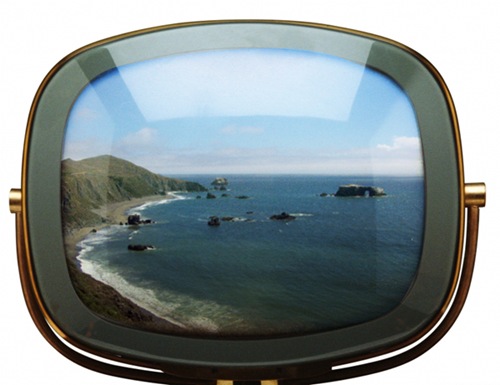
After searching the internet for quite a long time for examples of blended photography, this photo is the only one I found that closely depicts what I have in mind for my project. I am using an old window pane that I found at Habitat for Humanity instead of a mirror, but the idea is the same. I am going to try and depict photographs in the window that do not relate to the surrounding area outside of the window pane. My challenge has been finding images and scenery to shoot that do not relate but still will be interesting to the viewer. Since I am going to LA for a couple of days this week, of course I plan to bring my camera and take advantage of the different environment. :-)
While doing my research, I came across this article (link below) that was really eye opening to me. I hadn't really thought that I was so naive about photographs that I see in magazines or online, but I guess I was. In the article, "Getting the Image You See in Your Head" by Rick Berk, the photograph of the rock arch and beautiful sky are stunning. The colors of the surrounding landscape and the exposure are perfect. After reading about his process of achieving this perfection, I was enlightened. He blended photographs to achieve this photographic perfection. I've read National Geographic and Phoenix Home and Garden magazine, and I've seen many similarly beautiful photographs. I am always amazed at the skill that it must take to shoot such gorgeous pictures. Now I know that it's not always just skill with the camera, but also skill with Photoshop.
http://digital-photography-school.com/getting-the-image-you-see-in-your-head-blending-vs-hdr/
Darcie Naylor

http://www.photoshoptutorials.ws/photoshop-tutorials/photo-manipulation/blending-two-images-seamlessly-with-photoshop/
After searching the internet for quite a long time for examples of blended photography, this photo is the only one I found that closely depicts what I have in mind for my project. I am using an old window pane that I found at Habitat for Humanity instead of a mirror, but the idea is the same. I am going to try and depict photographs in the window that do not relate to the surrounding area outside of the window pane. My challenge has been finding images and scenery to shoot that do not relate but still will be interesting to the viewer. Since I am going to LA for a couple of days this week, of course I plan to bring my camera and take advantage of the different environment. :-)
While doing my research, I came across this article (link below) that was really eye opening to me. I hadn't really thought that I was so naive about photographs that I see in magazines or online, but I guess I was. In the article, "Getting the Image You See in Your Head" by Rick Berk, the photograph of the rock arch and beautiful sky are stunning. The colors of the surrounding landscape and the exposure are perfect. After reading about his process of achieving this perfection, I was enlightened. He blended photographs to achieve this photographic perfection. I've read National Geographic and Phoenix Home and Garden magazine, and I've seen many similarly beautiful photographs. I am always amazed at the skill that it must take to shoot such gorgeous pictures. Now I know that it's not always just skill with the camera, but also skill with Photoshop.
http://digital-photography-school.com/getting-the-image-you-see-in-your-head-blending-vs-hdr/
Monday, March 24, 2014
Hello Group!
Try submitting some images to this wonderful student juried exhibition. "Emerge" at Art Intersection!
Due Date Monday March 31st
http://artintersection.com/event/submit-to-emerge-2014/
Try submitting some images to this wonderful student juried exhibition. "Emerge" at Art Intersection!
Due Date Monday March 31st
http://artintersection.com/event/submit-to-emerge-2014/
parrot behind the scenes
Vision and reality: painted parrot and frog people
http://www.dailymail.co.uk/news/article-2580260/Artist-paints-womans-entire-body-make-look-like-parrot.html
Unit Project #2 Vision and Reality
Hayley Vrana
http://weandthecolor.com/witty-street-art-photography-alexey-menschikov/30367
http://designbeep.com/2011/10/26/45-stunning-examples-of-water-drop-reflection-photography/
http://www.modny73.com/artwork/photography/50-mind-blowing-images-of-reflective-photography/
For my Vision and Reality project I want to explore the world in reflections. I want to try and find reflections in things that you wouldn't think to look at and objects you look at everyday in life. I haven't decided if I just want to do reflections in water or just any object yet, but I know I want to show many different subjects in the reflections. I even found a cool website that helps with how to take reflections in water. I might try to recreate one of the pictures up above in different ways if possible. For example I have taken pictures of little water drops, but I never thought to see if there was a reflection in it. I wanted to know how some reflections are caught since lots of reflections are just caught by mistake, without even thinking about it. "Tips: Remember your choices: the subject and its reflection; just the reflection; still water; and blurred water. Direct light on water creates glare – you want the direct light to fall on your subject which is then reflected in water which is in the shade. If there is glare, you can use a polarizing filter to reduce or even remove it.Try using a graduated neutral density filter. Usually the reflection is a couple of stops darker than the main subject so you can use a graduated neutral density filter to even things out. If you don't have one, you can always try the digital equivalent in Lightroom or Photoshop. But remember the reflection part of the image should still be slightly darker. If you make it as bright as the main subject the image will not look right."
http://digital-photography-school.com/how-to-photograph-reflections-in-water
I found these tips to be very helpful when trying to take water reflections.
Hayley Vrana
http://weandthecolor.com/witty-street-art-photography-alexey-menschikov/30367
http://www.modny73.com/artwork/photography/50-mind-blowing-images-of-reflective-photography/
For my Vision and Reality project I want to explore the world in reflections. I want to try and find reflections in things that you wouldn't think to look at and objects you look at everyday in life. I haven't decided if I just want to do reflections in water or just any object yet, but I know I want to show many different subjects in the reflections. I even found a cool website that helps with how to take reflections in water. I might try to recreate one of the pictures up above in different ways if possible. For example I have taken pictures of little water drops, but I never thought to see if there was a reflection in it. I wanted to know how some reflections are caught since lots of reflections are just caught by mistake, without even thinking about it. "Tips: Remember your choices: the subject and its reflection; just the reflection; still water; and blurred water. Direct light on water creates glare – you want the direct light to fall on your subject which is then reflected in water which is in the shade. If there is glare, you can use a polarizing filter to reduce or even remove it.Try using a graduated neutral density filter. Usually the reflection is a couple of stops darker than the main subject so you can use a graduated neutral density filter to even things out. If you don't have one, you can always try the digital equivalent in Lightroom or Photoshop. But remember the reflection part of the image should still be slightly darker. If you make it as bright as the main subject the image will not look right."
http://digital-photography-school.com/how-to-photograph-reflections-in-water
I found these tips to be very helpful when trying to take water reflections.
How often do we wake up in the middle of the night in a dark room and mistake a hanging rob for something completely different. Our eyes are very sensitive organs and they see what there are presented. Sometimes we are able to see beyond whats in front of us but there still has to be a base. Just the angle at which a subject is presented could provide a different vision.The top photograph is an image of the side of a building, but the way its presented could possibly mean something else to the viewer. The bottom photograph looks like the most painful experience in life, but in reality, I'm sure it something completely different even though I don't know how it was put together. What the eyes sees and what an object really is can be a world apart.
Sunday, March 23, 2014
John Anthony Muth
I was completely baffled by this assignment. I had some ideas but nothing was inspiring me. I had been out four times this week from about 8PM to anywhere until 4AM. I went to Phoenix, Tempe (climbed a huge rock), Apache Junction, and in Mesa in my own backyard so to speak, it was a vacant lot near where I live.
I choose the photo below because I am amazed at how much detail the photograph has of the stars but I know from personal experience that a 30 second exposure with have stars shift in the sky and there is no shifting in these photos. Photographer Royce Bair must be using an exceptionally high ISO. I would also think that an very large aperture would be required too but everything seems to be in focus with no shallow DoF to be seen. I am stumped to say the least.
I was completely baffled by this assignment. I had some ideas but nothing was inspiring me. I had been out four times this week from about 8PM to anywhere until 4AM. I went to Phoenix, Tempe (climbed a huge rock), Apache Junction, and in Mesa in my own backyard so to speak, it was a vacant lot near where I live.
I choose the photo below because I am amazed at how much detail the photograph has of the stars but I know from personal experience that a 30 second exposure with have stars shift in the sky and there is no shifting in these photos. Photographer Royce Bair must be using an exceptionally high ISO. I would also think that an very large aperture would be required too but everything seems to be in focus with no shallow DoF to be seen. I am stumped to say the least.
Wednesday, March 19, 2014
I get a lot of ideas
https://www.lensculture.com/articles/deborah-oropallo-guise#slide-6
https://www.lensculture.com/ldemaison
http://fontcuberta.com/
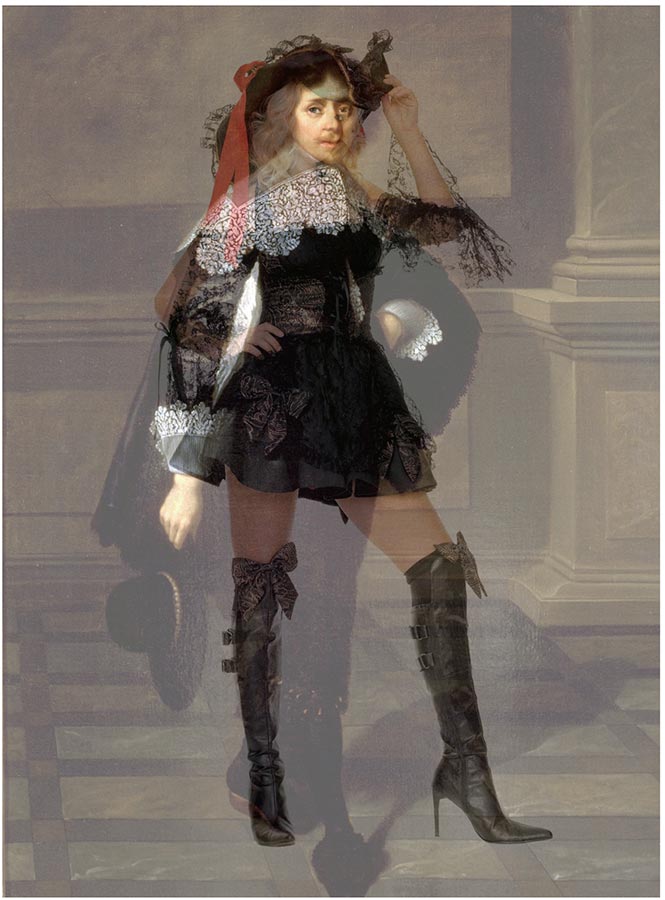
Seeing many of the images on the lens culture website helped kick start my creative process. The works of Deborah Oropallo's series GUISE use famous paintings of men from the 17th and 18th centuries layered with photos of women in fetish costumes. Laurence Demaison's series "Moving performances, still photographs" uses long exposures and moving subjects, showing trails of light hands against a dark body. Joan Fontecuberta created animal mash ups before they flooded the internet. For me these three artists' creations combine in my head to form a loose idea of where I want to try to take the vision and reality project. I am thinking about portraits, perhaps self portraits, layering with appropriated images - either comic book art (superheroes, villains, monsters, and creatures) or images from video games or images of animals. Perhaps in a way which reveals the inner thoughts or self perceptions of the subjects. The ideas are still bouncing around in my head.
https://www.lensculture.com/ldemaison
http://fontcuberta.com/
Seeing many of the images on the lens culture website helped kick start my creative process. The works of Deborah Oropallo's series GUISE use famous paintings of men from the 17th and 18th centuries layered with photos of women in fetish costumes. Laurence Demaison's series "Moving performances, still photographs" uses long exposures and moving subjects, showing trails of light hands against a dark body. Joan Fontecuberta created animal mash ups before they flooded the internet. For me these three artists' creations combine in my head to form a loose idea of where I want to try to take the vision and reality project. I am thinking about portraits, perhaps self portraits, layering with appropriated images - either comic book art (superheroes, villains, monsters, and creatures) or images from video games or images of animals. Perhaps in a way which reveals the inner thoughts or self perceptions of the subjects. The ideas are still bouncing around in my head.
Tuesday, March 18, 2014
Vision and Reality - Research/Thought Process
Darcie Naylor

Darcie Naylor

"Photography's gift isn't the ability to reproduce reality, it's the ability to expand it."
The photo above, the quote, and the excerpt below is taken from a blog posting by photographer Gary Hart.
"When I hear a photographer say “That’s
exactly what I saw when I was there,” I cringe. Not only is capturing human
reality in a photograph impossible (really), attempting to do so is so
limiting. I’m a strong advocate of “honest” photography, photography that
depicts a natural truth without digital deception. But photographic truth is
not the same as human truth, a fact photographers should celebrate, not deny.
Your camera’s reality opens the door to revealing nature in ways humans can’t."
"Photographers jump through lots of hoops to
overcome limited depth of field and more closely approximate their own
experience of the world. Tiny apertures, tilt-shift lenses, and blended images will
do it, albeit with trade-offs. And when all else fails, we’ll bump our ISO into
the noisy stratosphere. All that is well and good, but let’s not forget that
there’s no rule that says your capture must mimic your experience. Sometimes we
can use our camera’s ability to severely limit depth of field to our advantage
by eliminating distractions and turning uninteresting backgrounds into a
complementary canvas of color and shape."
About the photo above: While taking photographs near the Pohono Bridge in Yosemite, Gary Hart's eyes saw an "overwhelming variety of input:" dogwood blooms, the Merced River, cars, other photographers, all beneath what he describes as "a boring pale blue sky." While these elements made up the whole of the picture before him, he really only wanted to "convey the dogwood's elegant grace in the context of its simple verdant setting - everything else was superfluous."
Even though his eyes saw everything around him, he chose to focus on the bloom using a telephoto lens and large aperture, this allowed him to "[reduce] the rest of the world to a soft canvas of variegated green." He states that while "this image is nothing like what [his] eyes saw, it is what [his] camera saw."
Pasted from <http://garyhartblog.com/2012/05/12/photographic-reality/>
I think that is going to be my challenge with this project, to reduce the rest of the world around me and focus only on what I want the camera to see and thus show my viewers. I will be trying to capture my vision of what is around me with the smallest amount of visual noise. This should be interesting.
The photo below is from Abelardo Morell's Camera Obscura collection. It intrigues me. I love the vision of the room through the glass lenses. This particular photo is giving me food for thought on what I want my project to be.
Wednesday, March 5, 2014
ICP past exhibitions - Christer Strömholm: Les Amies de Place Blanche
http://www.icp.org/museum/exhibitions/christer-stromholm-les-amies-de-place-blanche
I liked this exhibition because it probes the meaning of gender and gender identity, which I have been interested in for years. Christer Strömholm was a Swedish photographer who spent ten years living among transgendered "ladies of the night" beginning in the late1950's in Paris. From the ICP PDF press release for the exhibit - "As Strömholm wrote in 1983: 'These are images of people whose lives I shared and whom I think I understood. These are images of women—biologically born as men—that we call "transsexuals." As for me, I call them "my friends of Place Blanche." It was then—and still is—about obtaining the freedom to choose one’s own life and identity.'" The Press release also goes on to say that these women were mistreated by authorities. I see the relevance in today's society where the transgender community is still misunderstood and not accepted by the general public. In Russia and other countries they are abused and arrested. It is getting better but not fast enough. All the photos are from the 1960's in black and white, so they show popular fashion of the time. The subjects seem so glamorous to me. They were so brave to live honestly in that time period. I am especially impressed with the fact that they allowed themselves to be photographed.
ICP Past Exhibitions - Justin P.
For this week's research I chose the 'Weird Beauty: Fashion Photography Now' exhibition. Fashion photography is one of my favorite, so I was instantly drawn to this by the title. From the description it seemed like a magnificent show! Not only did they have the original prints of the photographs, but they had hundreds of tear sheets and magazine covers featuring the photographs. I feel like all the big designers would be there and everybody would be wearing some crazy high fashion outfit (like from Zoolander or something), which would be awesome. Once I took a look at the photographs I knew instantly that this is the one that I'd want to go to. Now if only we could create a time machine so I could go back to January 2009...
Photographs like this remind me of an Annie Leibovitz of the fashion world. They are almost 'caught in the moment' like it could definitely be Marc Jacobs just goofing around or it could be planned out and posed, you just don't know. His expression makes me feel like it was posed because it's so stern, if he was goofing you'd think he'd have a smile (and his drink would be everywhere). However, the body position makes me feel like it was caught in the moment. Who knows, and does it really matter? It's a great photograph.
Sunday, March 2, 2014
ICP Elliott Erwitt: Personal Best
Hayley Vrana
I really liked this picture but it wouldn't blowup, but I put it up any way, because I really like how the fog is covering the New York skyscape and the woman in the foreground is crisp and clear.
This Exhibition was to showcase Elliot Erwitt's photos. He was known for documentary and commercial photography. He has photographed many well known people from Marilyn Monroe to Jackie Kennedy.
I chose this collection because I looked through all the pictures and it definitely represented the past's history. He had a picture of Jackie Kennedy at the funeral for her husband, he had a picture of the white and colored drinking fountains. I didn't really choose a picture that showed the history, but I just really liked this one. The way the man and woman are kissing in the mirror with the ocean in the background is just really pretty. I like how the ocean is blurred and the car and people clear. This picture just reminds me of the old Elvis Presley movies, with him romancing the girl.
ICP
by John Anthony Muth
I choose two photos for this assignment from two different exhibitions but that overlap in meaning.The first photo is from;
Other Weapons: Photography and Print Culture During the Spanish Civil War. This is a propaganda poster from the Spanish Civil War (1936-39). It addresses the plight of the spanish people against their dictator Franco, but it also shows Nazi involvement in this struggle. Publicly Franco borrowed Germany's air force to subdue the revolution in Spain. In reality, Hitler used his Luftwaffe, with German pilots, to bomb the Spanish rebels as practice for the world conflict to come.
The poster uses vibrant warm colors of red and yellow mixed with purple combined with organic lines to express fire and strife of being bombed and oppressed by the Franco regime and the Nazis as communicated by the Swastika over the words "Cultura Facista." To me this poster demonstrates the idea that the culture of Fascism is destroying the people and it's artistic culture as represented by the woman, child and statue.
The second photo is from;
We Went Back: Photographs from Europe 1933–1956 by Chim. This is a photograph of Pablo Picasso in front of his painting "Guernica". I also chose this photo because "Guernica" was painted because the it represents a similar idea as the poster above, but it is more specific. The painting "Guernica" symbolizes the destruction of the town of Guernica during the Spanish Civil War. I would love to attend both of these exhibits because of my fascination with history.
Subscribe to:
Posts (Atom)